
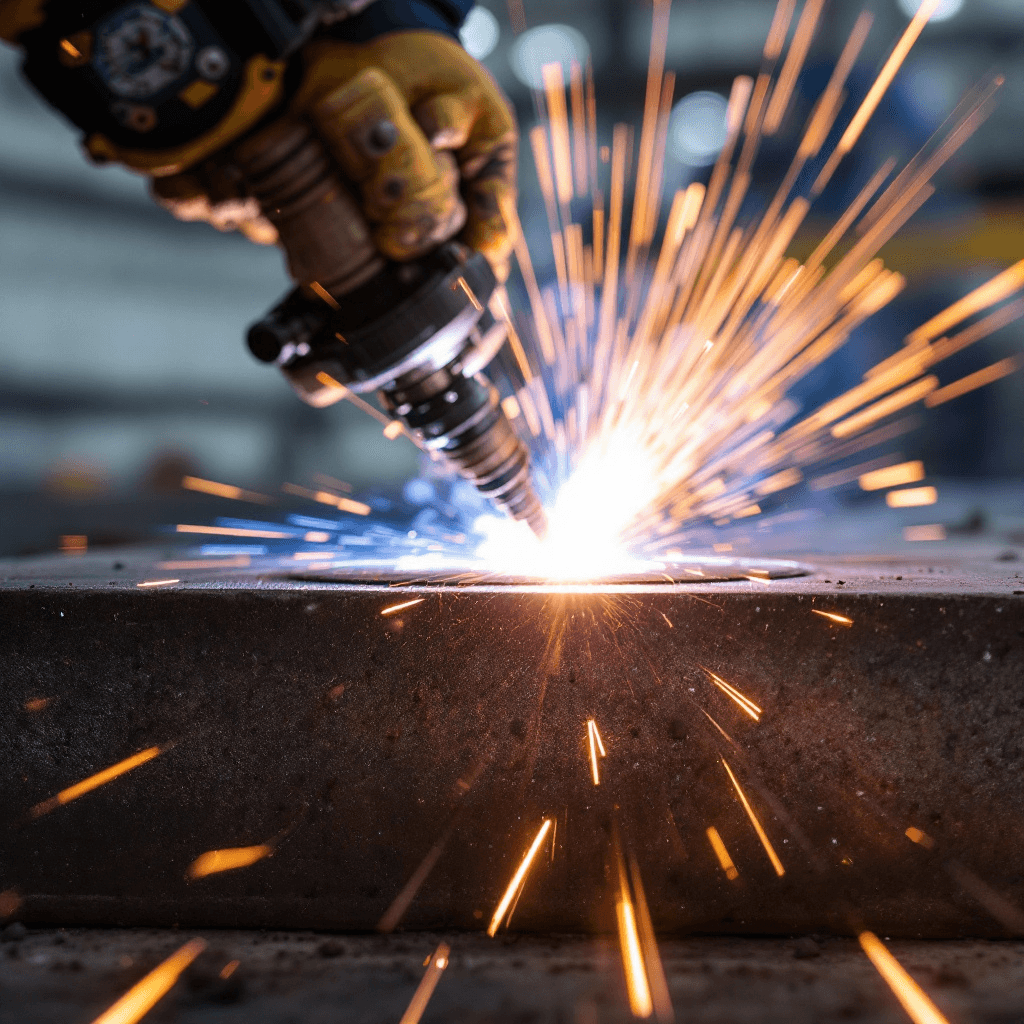

Steel weld inspection and testing isn’t just about looking for flaws – it’s about ensuring structures that hold our world together don’t fall apart. Whether you’re a seasoned inspector or new to the field, this comprehensive guide will walk you through advanced techniques that separate average inspectors from industry leaders.
Why Proper Weld Inspection Could Save Millions
Picture this: A major bridge collapse in 2019 resulted in $45 million in damages, all traced back to a single faulty weld that wasn’t properly inspected. That’s the reality of what’s at stake in our industry.
The 7 Essential Inspection Methods You Need to Master
1. Visual Inspection (VT): Your First Line of Defense
- Initial assessment before any other testing
- Look for surface discontinuities, misalignment, and poor bead appearance
- Required tools: welding gauges, strong lighting, magnifying glass
- Pro tip: Use a 5X magnifier for detailed surface examination
2. Magnetic Particle Testing (MT): Beyond What Eyes Can See
- Perfect for ferromagnetic materials
- Detects surface and near-surface defects
- 85% of inspectors prefer MT for its reliability in finding hairline cracks
- Common applications: structural steel, pressure vessels
3. Liquid Penetrant Testing (PT): The Color-Coded Truth
- Ideal for non-magnetic materials
- Reveals surface-breaking defects
- Cost-effective and portable
- Success rate: 95% for surface defect detection
4. Ultrasonic Testing (UT): The Deep Dive
- Penetrates deep into the weld
- Real-time results
- Can measure thickness and detect laminations
- Modern phased array systems offer 3D imaging
5. Radiographic Testing (RT): The Gold Standard
- Provides permanent record
- Detects internal defects
- Required for critical applications
- Digital radiography reducing exposure time by 60%
6. Eddy Current Testing (ET)
- Fast inspection speeds
- No contact needed
- Perfect for thin materials
- Detects surface and near-surface defects
7. Advanced Digital Imaging
- AI-powered defect recognition
- 3D scanning capabilities
- Cloud-based reporting
- 40% faster than traditional methods
Common FAQs Answered
Q: How often should welds be inspected? A: Critical welds should be inspected at least quarterly, with high-stress areas checked monthly.
Q: Which method is best for my project? A: Consider material type, accessibility, and critical nature. Most projects benefit from combining VT with at least one other method.
Q: What certifications do I need? A: At minimum, AWS CWI or equivalent. ASNT Level II certification is recommended for advanced methods.
The Future of Weld Inspection
Industry experts predict AI and machine learning will revolutionize inspection by 2025. Early adopters report 30% better accuracy in defect detection when combining traditional methods with AI analysis.
Conclusion
Remember: proper weld inspection isn’t just about following procedures – it’s about protecting lives and investments. Stay updated with new technologies, maintain your certifications, and never stop learning.